

Vaping exposes you to fewer toxic chemicals than smoking, but it isn’t risk-free. Some use vapes to quit, but others fear increased nicotine use.
If you’re trying to choose between vaping and smoking, chances are you’re looking for clarity. Maybe you’re trying to quit cigarettes. Maybe you’ve heard that vapes are just as bad. Or maybe the cost of both habits has you doing the math.
The truth is, both products deliver nicotine. But how they do it, and what comes along for the ride, couldn’t be more different.
Here’s what we’ll cover right up front:
- Vaping skips the combustion and the 7,000+ chemicals in cigarette smoke.
- Some e-cigarettes deliver more nicotine than a cigarette, depending on strength.
- Vaping has helped many smokers quit, but dual use is common.
- The long-term health risks of vaping remain unclear.
- Media framing often misrepresents vape-related studies and injuries.
That’s a lot to weigh. And if you’re thinking about switching, timing matters. The wrong setup, poor advice, or misinformation can drive people right back to cigarettes, and in some cases, deeper into nicotine dependence.
Premium eJuice has spent years helping Canadians and U.S. customers navigate this exact crossroads. Whether you’re starting fresh or looking to fine-tune your setup, we offer expert guidance, product range, and flexible pricing (like our bulk mix-and-match discounts) to help you make a confident, informed switch, no pressure, just options.
If you’re ready to go beyond the surface-level debate, here’s what you need to know about the real differences between vaping and smoking, from toxins and nicotine levels to cost, cravings, and long-term impact.
The Health Trade-Off: What the Science Really Says
When comparing vaping to smoking, the first and most obvious difference is what you’re actually inhaling. Cigarette smoke contains more than 7,000 chemicals, including carbon monoxide, formaldehyde, benzene, and 70+ known carcinogens. These compounds are byproducts of combustion, the process of burning tobacco to deliver nicotine. That combustion is what produces tar, a sticky residue that coats your lungs and is directly responsible for cancer, COPD, and heart disease.
Vaping, by contrast, doesn’t burn anything.
It heats a liquid, typically a blend of nicotine, propylene glycol (PG), vegetable glycerin (VG), and food-grade flavorings, to create vapor. Because there’s no combustion, you eliminate the two most dangerous components of cigarette smoke: tar and carbon monoxide. For your lungs, that’s a meaningful difference.
What’s Actually Inside? Chemical Comparisons
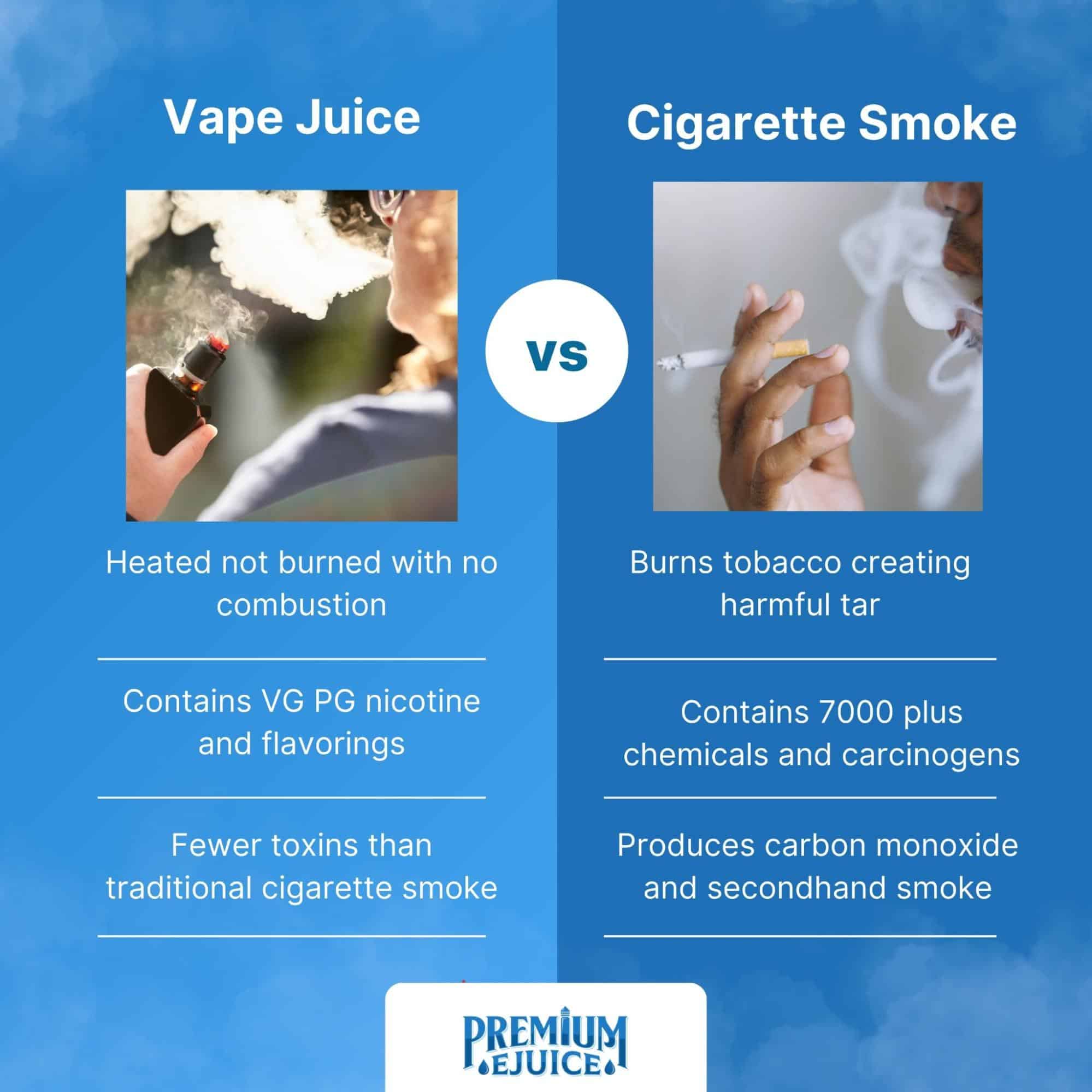
To understand the real differences between vaping and smoking, we have to break down what’s inside each puff. Because while both products deliver nicotine, how they deliver it and what else comes with it vary drastically.
Cigarettes burn tobacco, producing a smoke that contains:
- Tar: A toxic, sticky residue that builds up in the lungs
- Ammonia: Used in cleaning products
- Hydrogen cyanide: A chemical weapon in large doses
- Arsenic: Commonly used in rat poison
These are just a few of the 7,000+ chemicals released when a cigarette burns, many of them carcinogenic or otherwise toxic to human tissue. And because they’re burned, these chemicals are inhaled deeply into the lungs with every drag.
Vape juice, by contrast, contains:
- Nicotine: In freebase or salt form
- Vegetable glycerin (VG): A plant-based thickener
- Propylene glycol (PG): Used to carry flavor and provide throat hit
- Food-grade flavorings: Designed for taste, though not always studied for inhalation
This e-liquid is heated, creating a vapor that’s inhaled without combustion. That means no tar, no carbon monoxide, and significantly fewer toxic byproducts compared to cigarette smoke.
That said, not all vapes are created equal. In rare cases involving black-market or DIY vape products, substances like diacetyl or formaldehyde have been detected. These findings are usually the result of low-quality ingredients or extreme device settings. Regulated eJuice from reputable manufacturers does not pose the same risks, which is why buying from trusted retailers like Premium eJuice is so important.
Can Vaping Help You Quit Cigarettes?
If you’ve tried patches, gum, lozenges, or just white-knuckled your way through withdrawal, you already know how difficult quitting cigarettes can be. What makes vaping different is that it doesn’t just satisfy nicotine cravings. It also replicates the physical and behavioral ritual of smoking. The hand-to-mouth motion, the throat hit, the inhale. It’s all still there.
And for many smokers, that makes all the difference.
Vaping offers an experience that feels familiar while eliminating the smoke, tar, and toxic byproducts of combustion. It’s why so many people have found success making the switch, especially when other quit methods failed to stick.
One reason vaping works well for transitioning smokers is salt nicotine. Unlike traditional freebase nicotine, salt nic is smoother on the throat and delivers a quicker hit. It more closely mimics the way a cigarette feels. For new vapers, that similarity can make the switch far less jarring.
Even better, many users gradually taper down over time. It’s common to start at 50mg, as found in pod systems like STLTH or Allo, and work down to 10 to 12mg or even 3mg in freebase form. That level of control and flexibility simply doesn’t exist with cigarettes.
Do people vape more frequently than they smoked?
Sometimes, yes. But context matters.
More puffs doesn’t necessarily mean more harm, especially when there’s no tar, no carbon monoxide, and far fewer toxins involved. What matters most is how much nicotine you’re taking in and how you’re getting it.
If you’re using vaping to quit smoking, the setup you choose makes a big difference. From nicotine strength to ejuice type, having the right tools can make or break your transition. At Premium eJuice, we guide customers through the process every day, helping them find the ideal match based on their smoking history and goals.
We also stock a wide range of high-quality salt nic and freebase options, including 60ml bottles that stretch your dollar under Canada’s excise tax rules. With mix and match pricing that rewards smart buying, we make it easy to stay stocked, stay consistent, and stay in control.
Cost Comparison: Which Hits the Wallet Harder?
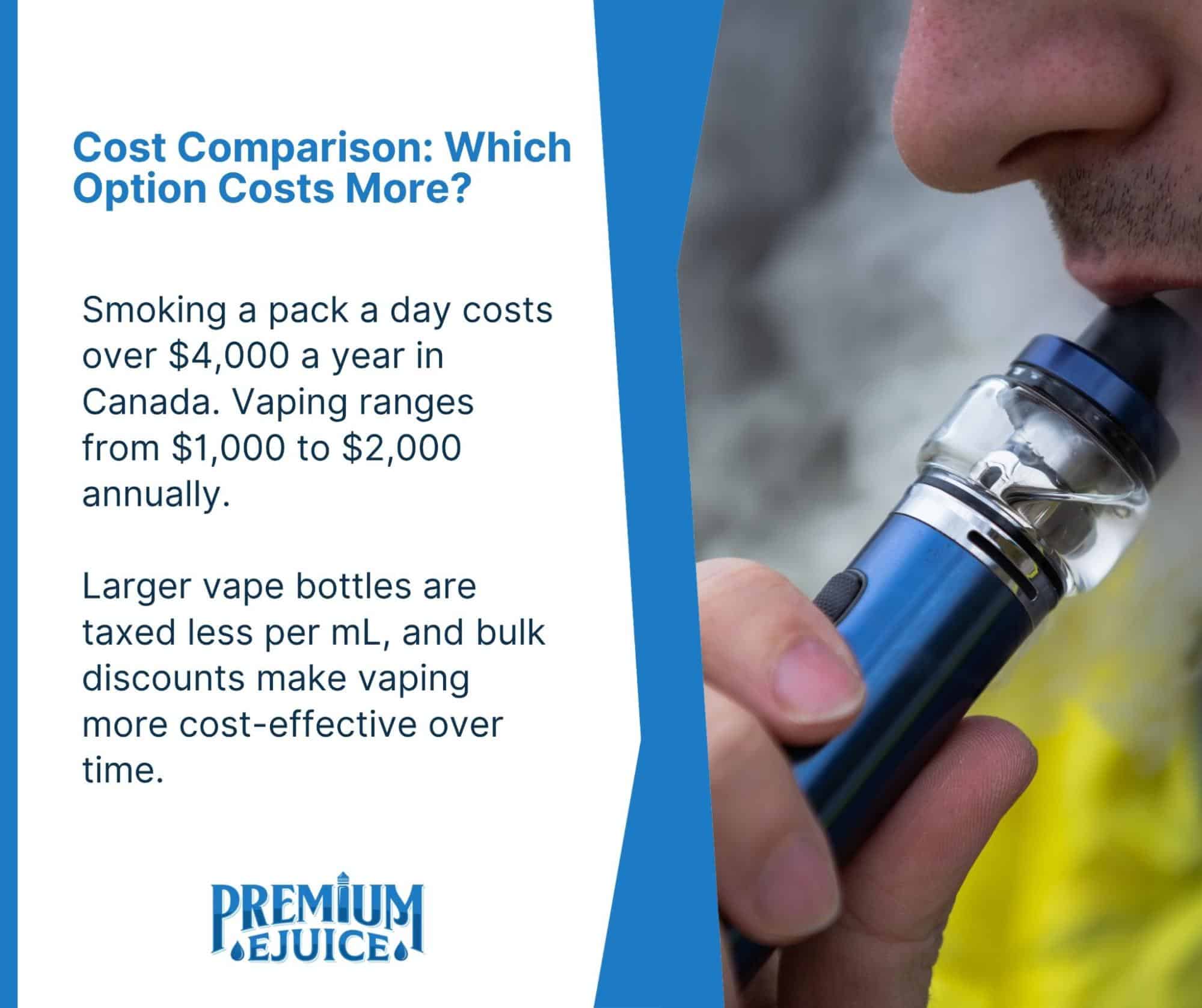
It’s not just your lungs that take a hit, smoking drains your wallet too. In Canada, a pack-a-day smoker can easily spend over $4,000 a year on cigarettes. And with tobacco taxes steadily rising, the cost only climbs.
Switching to vaping doesn’t just cut down your exposure to toxins, it can significantly cut your costs as well. A typical vaping setup, including a starter device, coils or pods, and regular ejuice, comes in around $1,000 to $2,000 per year, depending on usage and product choice.
One of the biggest price advantages is bottle size. Thanks to Canada’s excise tax structure, 60ml bottles are taxed at a much lower rate per milliliter than 30ml bottles, making them a smarter, more economical option for regular users.
Premium eJuice goes a step further with mix-and-match pricing that rewards smart buying. Our customers can save up to 20% on large carts, making it easy to stock up, stay consistent with nicotine levels, and avoid running out, one of the most common triggers for relapse.
And unlike cigarettes, where prices are fixed and unforgiving, vaping gives you control over your cost:
- Choose freebase nicotine for a longer-lasting hit (less frequent use)
- Opt for salt nic for a faster fix in smaller doses
- Pick bottle sizes that stretch your dollar
- Adjust your setup based on your evolving needs
The bottom line is that whether you’re quitting smoking or switching for long-term savings, vaping gives you more flexibility, more options, and less financial pain.
Addiction and Overuse: Is Nicotine More Addictive in Vapes?
Vaping gives users something cigarettes never could: controlled, on-demand nicotine without smoke, odor, or combustion. For people trying to quit smoking, that flexibility is often a major advantage. You don’t need to step outside or finish a whole cigarette. You can take a puff or two, get relief, and move on.
This kind of microdosing can be a positive tool when managed intentionally. Many vapers use it to avoid cravings, reduce stress, or keep their quit goals on track, especially in social or high-pressure situations where smoking used to be the default.
Salt nicotine plays a big role in that success.
It delivers a smoother throat hit and satisfies cravings faster than traditional freebase nicotine. That makes it ideal for people transitioning from cigarettes. Because salt nic absorbs quickly but also fades faster, some users may vape more often throughout the day to stay satisfied.
Freebase nicotine, in contrast, tends to stay in your system longer and feels stronger at higher concentrations. It is often the go-to choice for vapers who are looking to gradually taper down or reduce how often they reach for their device.
There is some concern about overuse, particularly among dual users who both smoke and vape. But this usually comes down to habit, not product design. Vaping is not inherently more addictive. It simply makes nicotine more accessible. That is why it is important to choose the right strength, stay aware of your intake, and adjust as needed.
And what if you do end up vaping all day long?
While that level of use isn’t ideal, it still means you are avoiding the 6,000 chemicals, carbon monoxide, and tar in cigarette smoke. That alone is a major win.
The key is not to fear vaping. It is to use it with purpose.
With the right setup and support, you can reduce harm, control your nicotine, and stay off cigarettes for good. At Premium eJuice, we help people do exactly that every day with personalized guidance, trusted products, and ongoing support.
Cigarettes vs Vapes: Which Should You Choose?
If you are not already using nicotine, the best advice is to avoid starting. Both smoking and vaping carry risks, and there is no benefit to beginning either if you do not already use them.
However, for those who do smoke, vaping can offer a significantly less harmful alternative.
The dangers of smoking are well established. It causes damage throughout the body and is linked to serious health conditions, including cancer, heart disease, and chronic respiratory issues. Vaping, while not completely risk-free, does not involve burning tobacco. This eliminates exposure to tar, carbon monoxide, and many of the toxic byproducts produced by combustion.
The key is to use the right products.
Not all vape devices and e-liquids are created equally. Poor-quality or unregulated options can increase health risks and make it harder to quit smoking successfully. It is important to choose trusted brands, avoid homemade mixtures, and steer clear of the illicit market.
At Premium eJuice, we help adult smokers make the switch with confidence. Whether you need support choosing a device, selecting the right nicotine strength, or finding flavors that work for you, our team is here to guide you. With competitive pricing, fast shipping, and dedicated customer support, we make it easier to stay consistent, stay stocked, and stay smoke-free.
Conclusion: Your Health, Your Call
If you are ready to move on from cigarettes, vaping can help you do it without giving up the parts of the ritual that make quitting so difficult. It offers the satisfaction of smoking without the combustion and the harm that comes with it.
At Premium eJuice, we have helped thousands of people make that switch with confidence. We offer carefully selected products, expert guidance, and everyday pricing that supports consistency and long-term success.
Explore our full collection of trusted eJuice, starter kits, and nicotine strengths to find your fit, and take the first step toward a smoke-free future.
FAQ
Is vaping worse than smoking?
No. Despite what some headlines suggest, vaping is significantly less harmful than smoking. The misconception that vaping is “worse” usually stems from fear of the unknown, not evidence-based science. Cigarettes contain over 7,000 chemicals and dozens of carcinogens. E-liquids do not.
Why do some smokers avoid vaping for health reasons?
It’s often psychological. Media coverage, emotional bias, and misinformation have convinced many smokers that switching to vaping might be riskier than staying with cigarettes. That perception can be deadly, and it’s rarely supported by data.
Is nicotine the harmful ingredient in cigarettes?
Nicotine is addictive and can raise heart rate and blood pressure, but it’s not the primary cause of smoking-related diseases. Lung cancer, COPD, and heart failure are caused by the combustion of tobacco, not the nicotine itself.
Are flavored vapes more dangerous than tobacco ones?
Not at all. Flavors have helped many adult smokers break away from tobacco for good. By offering a completely different sensory experience, flavored vapes help former smokers mentally separate from the act of smoking, making them a powerful quit aid, not a danger.

Stuart Rosenfarb CEO & Founder of Premium eJuice
Premium eJuice (previously Premium eJuice Samples) was established in 2013 by Founder & CEO Stuart Rosenfarb with the mission of helping as many smokers as possible kick their smoking habit forever, by providing a selection of the highest quality and best-tasting eJuices on the market to ensure a successful and lasting transition from smoking to vaping.