

Most vapes contain about 4–5 calories per mL of e-liquid, mainly from vegetable glycerin and propylene glycol. But since the vapor isn’t ingested like food, your body absorbs little to none of those calories.
Vaping may taste sweet, feel indulgent, and even mimic dessert, but when it comes to calories, it’s barely a blip on the radar. For weight-conscious vapers, calorie trackers, or anyone transitioning from cigarettes, the good news is that vaping won’t derail your diet.
Still, a lot of people have questions, and for good reason:
- Vape juice contains ingredients used in food, like vegetable glycerin, which does have calories.
- Flavoured e-liquids taste like candy, so people assume they must be loaded with sugar.
- Some use vapes to curb cravings during fasting or dieting and want to know if it counts.
- Others are concerned they’ll gain weight after quitting vaping due to appetite rebound.
At Premium eJuice, we hear these questions all the time, from new vapers, long-time customers, and health-conscious shoppers alike. And while there’s no nutrition label on your bottle of e-liquid, that doesn’t mean you’re left guessing.
Vape juice does contain a small amount of calories, but unless you’re inhaling liters of e-liquid a day, it won’t impact your weight, fasting schedule, or blood sugar response.
If you want the full story on where those calories come from, whether they’re absorbed, and how vape flavors play into cravings and weight control, read on.
What’s Actually in Vape Juice That Has Calories?
At a glance, vape juice looks simple, just a clear or lightly tinted liquid in a bottle or pod. But if you’re asking how many calories are in a vape, the answer starts with the base ingredients.
The two primary components responsible for any caloric content in e-liquid are vegetable glycerin (VG) and propylene glycol (PG). Both are food-grade substances used in everything from frosting to toothpaste, and yes, they contain calories.
- Vegetable Glycerin (VG): A thick, sweet-tasting liquid derived from vegetable oils. VG contains approximately 4.3 calories per gram.
- Propylene Glycol (PG): A thinner, less sweet base that produces a stronger throat hit. PG carries roughly 4.1 calories per gram.
On average, 1 mL of vape juice contains between 4–5 calories, depending on the VG/PG ratio. That means a standard 30mL bottle of eJuice carries around 120–150 calories, less than half a can of soda and consumed over several days or even weeks.
What About Flavorings and Nicotine?
This is where many vapers get confused, especially those drawn to flavors like custard, birthday cake, or strawberry milkshake. Despite tasting like desserts, most e-liquid flavorings are synthetic, non-nutritive compounds that contain little to no caloric value.
Nicotine, on the other hand, has no calories at all. But it does affect appetite, acting as a stimulant that temporarily suppresses hunger. This is one reason people often report reduced snacking or smaller meal portions when they start vaping.
Do Disposable Vapes Contain More Calories?
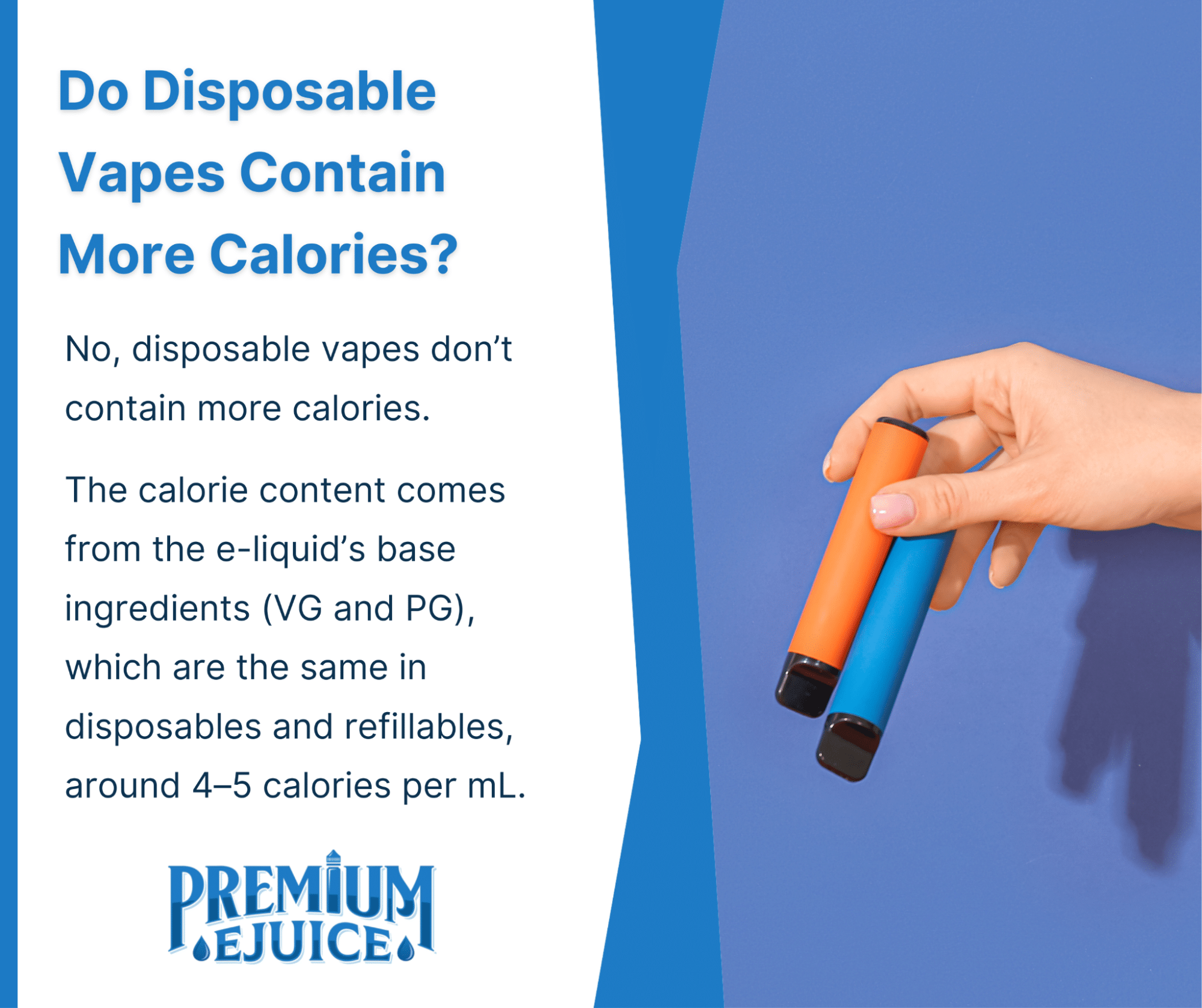
No. Whether you’re using a refillable vape, a pod system, or a disposable, the caloric content is determined by the PG/VG base, not the hardware. A 2mL pod in a disposable vape will have about 8–10 calories total, just like any other e-liquid.
Are Vape Calories Absorbed by the Body?
Inhaling vapor is not the same as eating. Your digestive system is designed to extract calories from food. Your lungs, meanwhile, are built for gas exchange. That makes the actual calorie absorption from vaping extremely minimal, if it happens at all.
While VG and PG have caloric value on paper, science hasn’t confirmed that those calories are absorbed into the bloodstream through the lungs. As of now, there’s no conclusive evidence showing that inhaled e-liquid leads to measurable caloric intake.
Example Breakdown:
If you vaped a full 600-puff device, you’d consume about 30 calories, roughly the same as a kosher pickle or a few tablespoons of sauerkraut. But again, most of that isn’t absorbed, making the real metabolic impact close to zero.
Do Sweet Flavours Mean More Calories?
This is one of the biggest misconceptions in vaping. The idea that something sweet must have sugar, and therefore calories, is hardwired into our brains. But with e-liquid, that logic doesn’t hold.
- Flavored vape juice is sweetened artificially or with calorie-free agents.
- Even dessert and candy-style eJuices usually contain no sugar at all.
- When sugar alcohols like sucralose are used, they’re present in trace amounts that add negligible calories, if any.
So Why the Diet Guilt?
Sweet-tasting vapes can trigger psychological associations with indulgence, cheating, or breaking a diet, even when they contain no calories. This emotional response leads some vapers to worry unnecessarily about their intake.
In reality, using dessert-inspired vape flavors is more akin to smelling a bakery than eating a cupcake. You’re getting the flavor and sensory experience, without the calorie load or insulin spike.
For anyone trying to cut sugar, manage cravings, or stick to intermittent fasting, flavored vape juice can serve as a powerful psychological substitute, without sabotaging your goals.
Vaping and Your Weight: The Bigger Picture
When it comes to weight and vaping, the question of calories is only one part of a much larger conversation. The truth is, vaping can influence your weight, but not in the way most people think. It’s less about caloric intake and more about how nicotine interacts with your appetite, brain chemistry, and habits.
Vaping vs. Smoking: Appetite Control Isn’t New
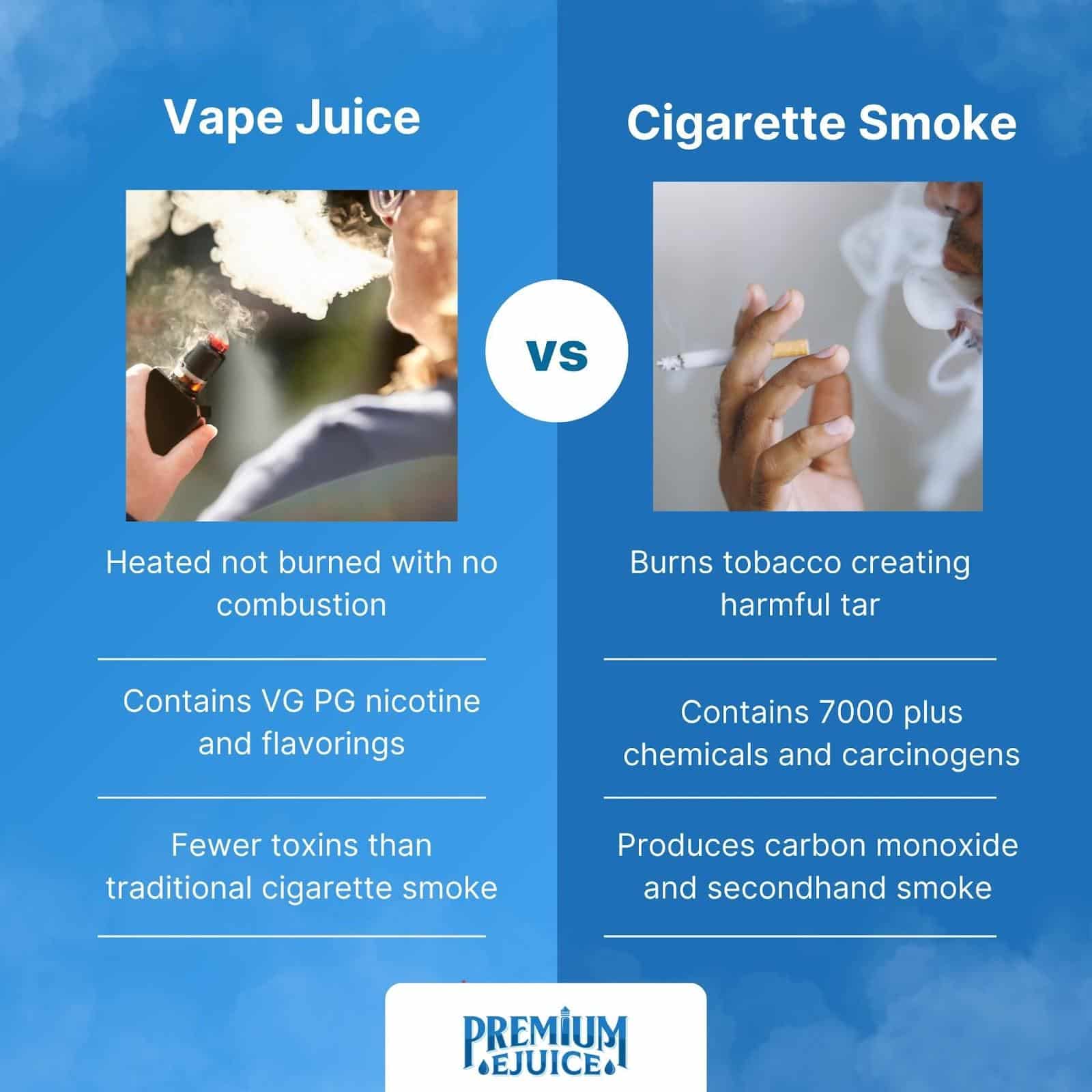
If you’ve ever smoked cigarettes, you already know that nicotine suppresses hunger. This is one reason many people historically gained weight after quitting smoking. Appetite returns, and food starts tasting better again.
Vaping mimics this effect, especially with higher nicotine strengths like salt nicotine, which deliver fast, satisfying hits. That quick dopamine release reduces food cravings and also mimics the same reward loop as eating something sweet, salty, or fatty.
So while nicotine itself contains zero calories, its effect on appetite can be significant. Many users report reduced snacking or delayed hunger during the day, especially when using flavorful vapes.
What Happens After Quitting Vaping?
Here’s where things can shift:
- Appetite returns, often with intensity, especially if you relied on vaping to delay meals or snack cravings.
- Your taste and smell become more sensitive, food becomes more enjoyable, and cravings may increase.
- Emotional triggers (like stress or boredom) that were soothed by vaping may now lead to snacking.
This doesn’t mean vaping is a diet strategy (more on that below), but it does mean quitting could temporarily impact your weight.
Can Vaping Replace Snacking?
For some, yes, but it’s not a silver bullet. Vaping, particularly dessert or candy-style e-liquids, can serve as a psychological substitute for high-sugar snacks. It’s about flavor satisfaction, not nutrition.
In fact, many users have successfully used dessert vapes to curb nighttime sugar cravings or avoid mindless snacking while watching TV.
There are real stories of people who replaced candy habits with flavorful e-liquids and noticed meaningful results. One long-time vaper even reported losing 15–20 kg (33–44 lbs) simply by swapping out sugary treats for sweet vape flavors.
But keep in mind that result is tied more to behavior change than the act of vaping itself. And it’s not guaranteed to work for everyone.
Are There Calories in Salt Nicotine vs. Freebase?
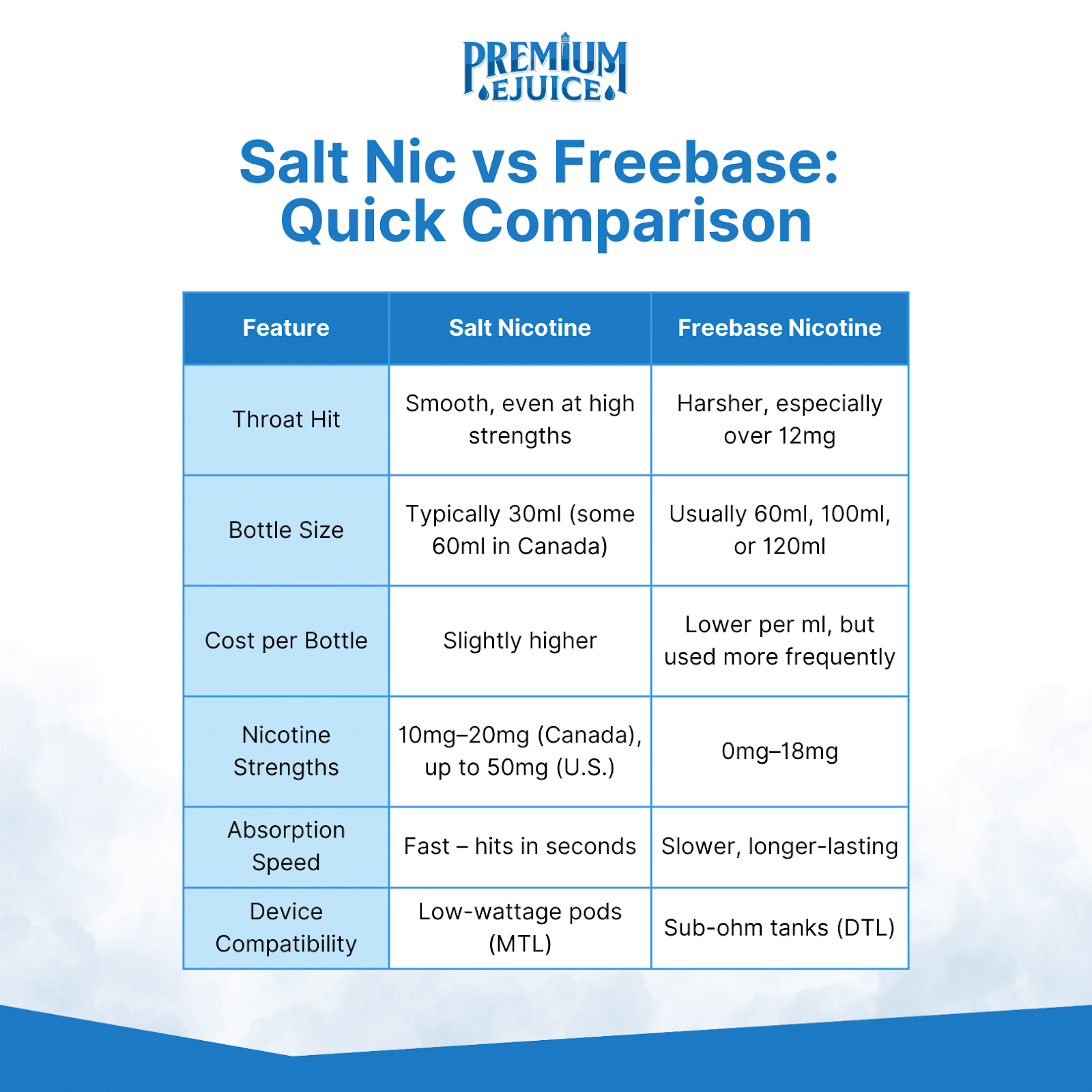
Whether you’re using salt nicotine (commonly found in 20mg–50mg strength pods) or freebase nicotine (used in lower strength, high-VG juices), the calorie content is virtually identical.
Why? Because the calories in e-liquid come from vegetable glycerin (VG) and propylene glycol (PG), the base ingredients, not from the nicotine type.
- Salt nic and freebase both use the same PG/VG foundation, so the caloric value per mL remains the same: about 4–5 calories per mL.
- The difference lies in how they affect your cravings: salt nic hits faster but wears off quicker, leading to more frequent use for some.
So if you’re counting puff calories (which, again, isn’t really necessary), your nicotine type won’t make a difference.
Why This Confusion Exists: Labeling and Marketing
It’s no surprise that so many people are confused about whether vaping contains calories. Much of the uncertainty stems from how e-liquids are marketed, labeled, and sold.
Vape Bottles Don’t Show Calories
Unlike packaged food and beverages, e-liquid bottles don’t carry nutrition labels. This absence leads to assumption-based guessing, and for the calorie-conscious, that often sparks unnecessary concern.
Do Sweet and Flavorful Vapes Mean They Contain Sugar?
Vapes that taste like blueberry cheesecake, lemon meringue, or caramel latte can fool your senses. It’s natural to assume that something that tastes indulgent must contain sugar and calories. But in most cases:
- These flavors are made with synthetic, non-nutritive compounds
- They provide zero to negligible calories
- There is no actual sugar in the majority of reputable vape juices
The sensory trickery is intentional. Flavor technology gives you the feeling of indulgence, without the metabolic load.
The Illicit Market Complicates Things
Not all vape products are created equal. Unregulated e-liquids may contain unknown sweeteners or poor-quality ingredients, which could technically include sugars or calorie-dense additives.
That’s one more reason to avoid the illicit market entirely, especially in regions like Canada, where excise taxes have unfortunately driven demand underground.
Why Regulated eJuice Is Safer
When you buy from a reputable, regulated vape retailer like Premium eJuice, you’re getting:
- Transparent ingredient profiles
- Clean-label formulations
- Products that meet Canadian compliance standards
It’s not just about quality, it’s about peace of mind. When you vape a trusted eJuice, you’re not gambling with hidden sugars or unnecessary additives. You know what’s in your bottle, and you know it won’t sabotage your goals.
Final Takeaway: Vape Smart, Shop Smarter
So if you’re counting calories, tracking macros, or just trying to stay mindful of your health, here’s the bottom line: vaping won’t sabotage your goals. The calorie content in e-liquid is so minimal it’s practically irrelevant. But make sure you’re using products you can trust.
At Premium eJuice, we offer only clean-label, lab-tested vape juice from reputable brands in Canada and the U.S., no mystery ingredients, no shady additives, and no diet guilt.
Shop Premium eJuice now for a vape experience that’s not just satisfying, but smart, safe, and guilt-free.
FAQ
Does vaping burn calories?
No. Vaping is not a form of physical activity and does not increase your metabolic rate. At best, it replaces behaviors (like snacking) that do contribute to calorie gain.
Can vaping make you gain weight?
Unlikely. The vapor contains too few calories to have any impact. However, quitting vaping, like quitting smoking, can lead to weight gain if cravings return and aren’t managed.
Can I use vaping instead of dessert?
Psychologically, yes. Many people use dessert-inspired vape juice to satisfy flavor cravings without the sugar. It’s not the same as eating, but it can trigger the same reward response in the brain, without the insulin spike.
Will Vaping Break a Fast?
If you’re practicing intermittent fasting or following a strict keto protocol, you’ve probably wondered whether your vape is breaking the rules.
No, vaping does not break a fast.
Here’s why:
- E-liquids don’t contain protein, carbs, or fat, so they don’t stimulate digestive processes in the way that food or caloric beverages do.
- The trace calories present (roughly 4–5 per mL) are too small to impact insulin levels or kick you out of ketosis.
- Most importantly, vapor isn’t ingested, it’s inhaled, making the metabolic impact close to negligible.
If you’re fasting for metabolic or weight-loss reasons, vaping won’t interfere with your results.

Stuart Rosenfarb CEO & Founder of Premium eJuice
Premium eJuice (previously Premium eJuice Samples) was established in 2013 by Founder & CEO Stuart Rosenfarb with the mission of helping as many smokers as possible kick their smoking habit forever, by providing a selection of the highest quality and best-tasting eJuices on the market to ensure a successful and lasting transition from smoking to vaping.